


Is India Safe for Senior Couples and Older Travelers?
A lot of people in their 60s and 70s dream about visiting India. The Taj Mahal at sunrise. A boat ride on the backwaters of Kerala. The pink palaces of Rajasthan. Watching the Ganga aarti in Varanasi with thousands of candles reflected in the river. These are not bucket list items for a reason — they are genuinely life-changing experiences.
But the question that comes up again and again is this: is India safe for older travelers and senior couples? Is it too chaotic? Too hot? Too physically demanding?
The honest answer is yes, India is safe for older travelers — when you plan it the right way.
This guide is written specifically for senior couples, older travelers, and their families who want a real, straightforward answer. We cover everything: safety, best destinations, health tips, what kind of transport to use, how to pace the itinerary, and how to make sure the trip is enjoyable rather than exhausting.
Let us address the concern directly. India has a reputation for being chaotic, crowded, and overwhelming. That reputation is not completely wrong. Indian cities are busy, traffic can be intense, and the heat in summer is no joke.
But here is what the data and experience actually show: violent crime targeting foreign tourists in India is rare. Millions of international visitors travel here every year, including hundreds of thousands of older travelers and senior couples. The overwhelming majority return home safely with wonderful memories.
The real challenges for senior travelers in India are not about crime. They are about:
Every single one of these challenges has a clear, practical solution. The difference between a stressful India trip and an unforgettable one for older travelers almost always comes down to planning quality, not the destination itself.
The Golden Triangle is the most recommended starting point for senior travelers visiting India for the first time. It covers three iconic destinations within a manageable geographic area, the tourism infrastructure is excellent, and the driving distances between cities are reasonable.
Delhi is India’s capital and one of its most historically rich cities. For senior travelers, the key monuments — Humayun’s Tomb, Qutub Minar Complex, India Gate, Red Fort — are all well-organized with clear pathways. Most major heritage sites in Delhi are managed by the Archaeological Survey of India and have accessible entrances.
Agra is home to the Taj Mahal, one of the most extraordinary buildings in human history. The Taj Mahal complex is large but flat, with battery-operated vehicles available inside the grounds for those who find long walks difficult. The best time to visit is at sunrise when the crowd is thinnest and the light on the white marble is most beautiful.
Jaipur — the Pink City — is a feast for the eyes with its rose-tinted buildings, Amber Fort, Hawa Mahal, and City Palace. The city is well set up for tourism. Heritage hotels here are among the best in India, offering royal experiences in centuries-old palaces that have been thoughtfully modernized.
The Delhi to Agra to Jaipur triangle covers roughly 750 kilometres in a comfortable loop. With a private car and driver, the entire circuit can be covered smoothly in 7 to 10 days without any rushing.

Rajasthan is ideal for older couples who want a slower, more immersive experience. The state is built for hospitality — literally. Its palace hotels and heritage havelis were designed for guests who value comfort, beauty, and unhurried luxury.
Udaipur is consistently recommended as the most relaxed city in Rajasthan for senior travelers. The lakeside setting, the white marble City Palace rising above Lake Pichola, the heritage boat rides, and the intimate scale of the city make it feel manageable and deeply beautiful. Evenings here, watching the sun set over the lake from a hotel balcony, are the kind of moments people remember for the rest of their lives.
Jodhpur offers the magnificent Mehrangarh Fort — one of the most impressive forts in India — and the charm of the blue-painted old city below. The fort has a lift for elderly visitors to certain sections, making it more accessible than many Rajasthan forts.
Jaisalmer and its golden sandstone fort are unlike anything else on earth. Modern luxury desert camps outside the city offer suite-style tents with attached bathrooms, proper beds, and restaurant-quality food — the full desert sunset experience without any roughing it.

Kerala in South India is a top recommendation for senior couples who want beauty without intensity. The state moves at a different pace from North India — slower, greener, more peaceful.
The backwater houseboat experience in Alleppey is perfect for older travelers. You board a traditional kettuvallam houseboat with a private bedroom, attached bathroom, kitchen, and cook. For two to three days you float through a network of canals, lakes, and rivers watching rice paddies, coconut groves, and small villages go by. You eat freshly cooked Kerala meals. You sleep to the sound of water.
Kerala is also India’s center of Ayurvedic wellness tourism. Senior couples interested in traditional medicine, therapeutic massage, and holistic health treatments will find world-class Ayurvedic resorts throughout the state.
Munnar’s tea estate landscape, Kovalam’s beach, and Kochi’s historical Fort area round out a Kerala itinerary that is completely manageable for older travelers.

Varanasi is not for everyone, but for senior travelers with a spiritual or philosophical interest in India, it is the most moving destination in the country. One of the world’s oldest continuously inhabited cities, Varanasi sits on the banks of the holy Ganges River.
The sunrise boat ride on the Ganges — watching the dawn prayers and rituals at the ghats as the city wakes up — is a deeply affecting experience. The narrow lanes require some navigation, and the ghat steps are uneven, but with a good guide, the right footwear, and a slower pace, Varanasi is entirely accessible for older visitors.
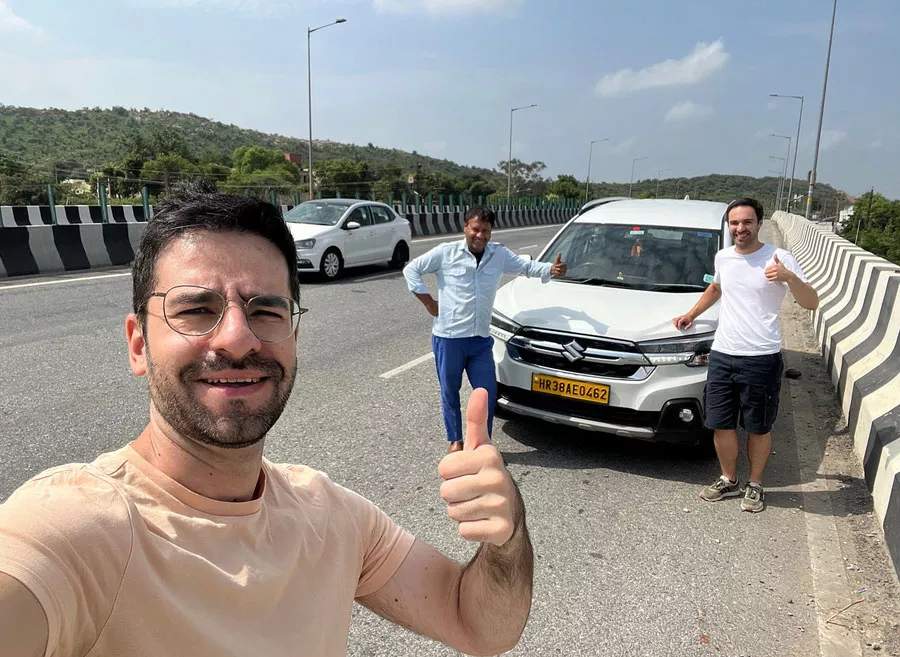
If there is one thing that makes the biggest difference for senior travelers in India, it is using a private car with a dedicated driver instead of public transport.
Indian public transport can be wonderful for adventurous younger travelers. For older couples, navigating crowded railway stations with heavy luggage, standing in queues in the heat, and managing unpredictable connections is genuinely stressful and physically taxing.
A private car and driver changes the entire character of the trip:
For senior couples doing a Golden Triangle or Rajasthan circuit, a private car with a driver is not a luxury — it is the practical backbone of a safe and enjoyable trip.
The second most common mistake senior travelers make in India is trying to cover too much in too little time. An itinerary with 8 cities in 10 days sounds exciting at the planning stage. In reality, it means almost daily hotel changes, constantly repacking bags, and very little time to actually absorb and enjoy each place.
A senior-friendly India itinerary follows these rules:
For example, instead of driving 6 hours from Jaipur directly to Jodhpur, stop overnight in Pushkar or Ajmer. It breaks the journey, adds a beautiful lake town to the itinerary, and arrives at Jodhpur fresh the next morning.
| Day | Destination | Activity |
|---|---|---|
| Day 1 | Delhi | Arrive, rest, hotel dinner |
| Day 2 | Delhi | Humayun’s Tomb, Lodhi Garden, India Gate |
| Day 3 | Agra | Drive to Agra, Taj Mahal at sunset |
| Day 4 | Agra | Taj Mahal at sunrise, Agra Fort, drive to Jaipur |
| Day 5 | Jaipur | Amber Fort, City Palace |
| Day 6 | Jaipur | Rest day or local market and Hawa Mahal |
| Day 7 | Udaipur | Drive via Ajmer/Pushkar, arrive Udaipur |
| Day 8 | Udaipur | Lake Pichola boat ride, City Palace |
| Day 9 | Udaipur | Sajjangarh Palace, leisure day |
| Day 10 | Jodhpur | Drive to Jodhpur, Mehrangarh Fort |
| Day 11 | Delhi | Fly or drive back, depart |
Not all Indian hotels are equally suitable for older guests. Before booking, check these specific things:
Accessibility checklist:
Heritage haveli hotels in Rajasthan are beautiful but often have steep staircases and no lifts. Always confirm accessibility before booking boutique properties. International hotel chains — ITC, Taj Hotels, Oberoi, Marriott — consistently maintain accessibility standards across their India properties.
Luxury palace hotels in Rajasthan — Umaid Bhawan Palace in Jodhpur, Rambagh Palace in Jaipur, Taj Lake Palace in Udaipur — combine the romance of heritage with five-star service and medical support on call if needed.
Stomach sensitivity is the most common health issue for international visitors in India. For senior travelers, managing this carefully is especially important.
Safe eating rules for older travelers:
What to pack for food safety:
Oral rehydration salts (ORS) sachets, a mild antacid, basic antidiarrheal tablets, and a doctor-prescribed antibiotic for traveler’s stomach issues just in case. These are available in India too, but having them ready means you handle any issue quickly without hunting for a pharmacy.
Medications and Medical Care in India
Before leaving home:
Medical care available in India:
Major Indian cities have excellent private hospitals. Apollo Hospitals, Fortis Healthcare, Max Healthcare, and Medanta are internationally recognized hospital chains with facilities in Delhi, Jaipur, Mumbai, Hyderabad, and other major cities. English-speaking doctors are standard at these hospitals. Medical costs in India — even at top private hospitals — are significantly lower than the UK, USA, or Australia.
Your private driver will know the nearest reputable hospital to every city on your route. This is one more reason why having a trusted driver matters for senior travelers.
Travel insurance: Comprehensive travel insurance with medical evacuation cover is non-negotiable for senior travelers in India. Make sure your policy covers pre-existing conditions and hospitalization in India.
Timing is critical for older travelers because heat is a genuine health concern.
| Season | North India (Delhi, Agra, Jaipur, Rajasthan) | South India (Kerala) |
|---|---|---|
| October to March | BEST – cool, clear, pleasant | Good but some rain in Nov |
| April to June | AVOID – 40-45 degrees C heat | Acceptable with AC |
| July to September | Manageable – cooler but humid, monsoon rain | Monsoon – heavy rain |
This period gives you cool to mild temperatures across North India, clear skies for monument photography, and comfortable conditions for sightseeing. December and January can get cold in the evenings (8 to 15 degrees C in Rajasthan) so pack a light jacket.
India’s heritage sites involve walking — sometimes significantly — on uneven, ancient stone surfaces. Marble floors at the Taj Mahal, sandstone steps at Rajasthan forts, temple courtyards that require removing shoes — these all need preparation.
Recommended footwear:
Mobility aids:
If you use a walking stick or cane, bring it. A good driver can also help by staying close during monument walks. Many major monuments have wheelchair-accessible routes — Taj Mahal, Humayun’s Tomb, and several Rajasthan palaces — but confirm specifically for each site. Inform your tour operator in advance about mobility considerations and they can arrange appropriate vehicle access, priority entry, and rest stop planning.
Tip: Battery-operated buggies are available inside the Taj Mahal complex for mobility-impaired visitors. These take you from the main gate to the monument and back without the full walk.
Common Concerns About India Travel for Senior Couples – Answered
“Will we be targeted by scammers because we are older?”
Scams in tourist areas — inflated prices, fake guides, commission-based shops — happen to all tourists, not specifically older ones. The prevention is simple: pre-arranged reputable transport, hotel-recommended guides, and agreeing on prices before accepting any service. A good private driver dramatically reduces exposure to these situations.
Most senior travelers enjoy India more when they spend at least 7 to 14 days and focus on fewer destinations with a slower pace rather than trying to cover too much too quickly.
Yes, India is generally safe for senior couples when the trip is properly planned with trusted hotels, sensible routing, and private transportation.
The Golden Triangle, Rajasthan, Kerala, and well-planned cultural routes are among the best options because they combine good infrastructure, strong tourism services, and rewarding experiences.
Yes, hiring a private driver is often the most comfortable and practical option for senior travelers because it reduces transport stress and allows a more flexible pace.
Yes, major Indian cities have strong private hospitals, modern medical facilities, and English-speaking doctors that are well suited to international visitors.
October to March is usually the best season for senior travelers because the weather is cooler and more comfortable in North India and Rajasthan.
Yes, when travelers choose reputable restaurants, drink bottled water, and begin with freshly cooked mild meals, Indian food is usually very manageable.
Luxury trains can suit senior travelers very well because they combine sightseeing, comfort, dining, and organized logistics in one experience, though route style and mobility needs should still be considered.
No, not when it is planned properly. Rajasthan works very well for older travelers when the pace is slower, hotels are comfortable, and city changes are limited.
Yes, most luxury hotels in India are experienced in helping older guests with dietary requests, luggage support, mobility help, doctor arrangements, and general comfort needs.

About the Author
India Travel Specialist and Tour Planner
My name is Amit Singh, and I am an India travel specialist and tour planner at Private Driver in India. I help international travelers plan comfortable, safe and personalized private tours across India.
I specialize in Golden Triangle tours, Rajasthan road trips, private car and driver journeys, family holidays and customized India itineraries. My goal is to help you choose the right route, suitable vehicle, realistic travel pace and memorable experiences for your India trip.